Two vibrant salt lakes are situated along the northwestern boundary of Torrevieja in Spain’s Costa Blanca region.
These lakes collectively constitute the Las Salinas de Torrevieja nature reserve. Among them, one lake is particularly notable for its striking bubblegum pink coloration, which eclipses the greenish hue of the nearby lake.
From an aerial perspective, the scene resembles a large bathtub adorned with pink and white bubbles.

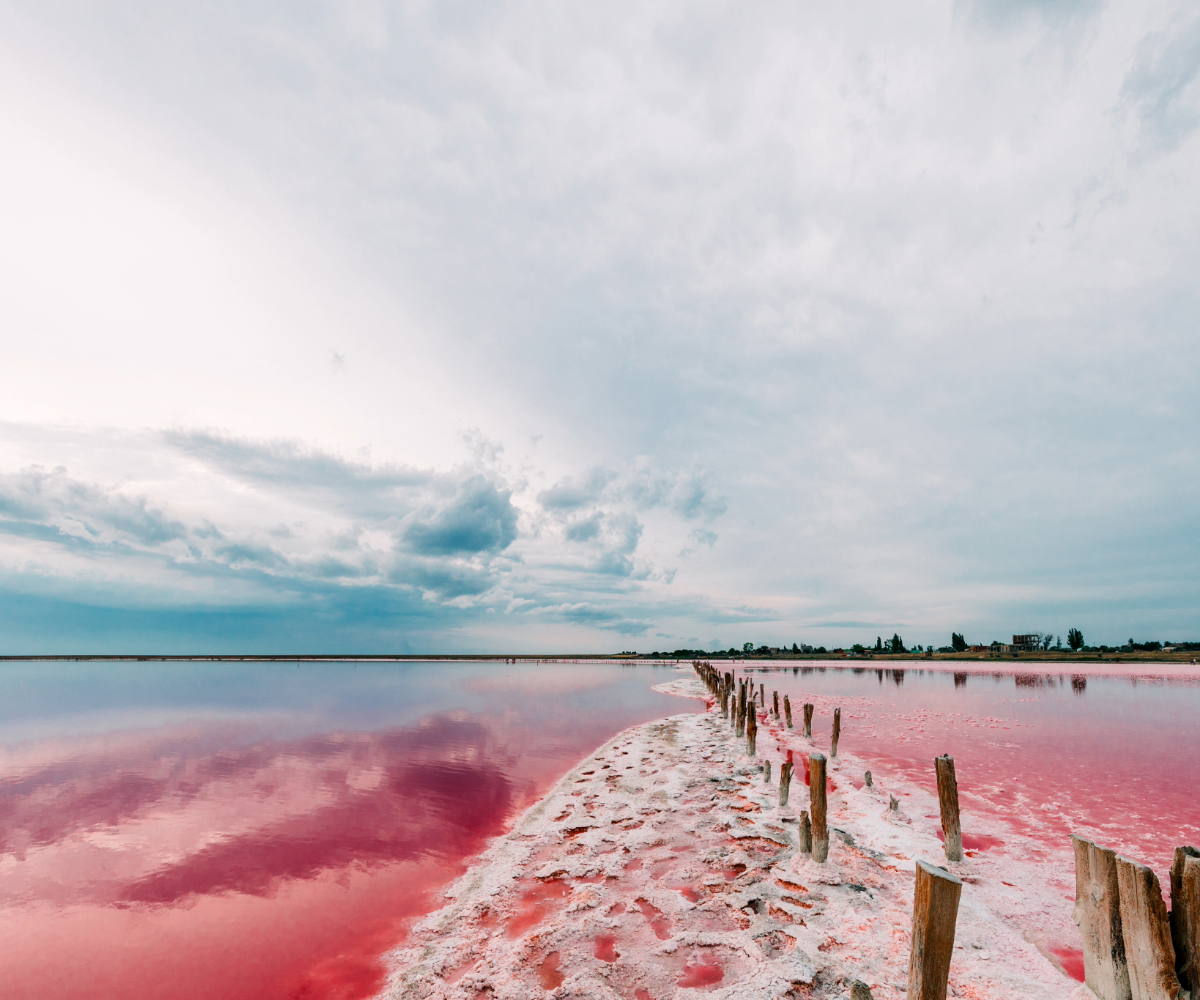
From the main road entering Torrevieja, one cannot help but observe the expansive salt mountains extending alongside the pink salt lakes (Laguna Rosa).
However, the lakes are not consistently pink; weather conditions can influence the coloration of the lake, causing them to shift from pale pink to deep pink or brownish purple depending on the lighting conditions.
The unusual appearance is caused by bacteria and algae. Halobacterium, also referred to as “salt bacterium', prospers in saline environments, as does a microalga known as Dunaliella salina.
These two organisms serve as the key components responsible for the lake’s peculiar coloration. Despite its distinctive hue, the water remains safe, although it may develop a foul odor.
Torrevieja relies on its salt lakes. People have been collecting minerals from the waters for centuries.


In the early 19th century, they officially emerged as a center for Spain’s salt production industry.
The sludge of mud and salt at the bottom has healing properties that can relieve common skin and respiratory ailments.